Accelerating Agile in the Age of AI
Turn AI into part of the sprint—not an add-on. Clear, practical insights based on Jeff Sutherland’s Scrum principles.

AI Daily Scrum: A Practical Protocol for Hybrid Carbon–Silicon Teams
AI Daily Scrum: A Practical Protocol for Hybrid Carbon–Silicon Teams The AI Daily Scrum is no longer theory. As the marginal cost of intelligence approaches zero, real Scrum teams are shifting from all-human to hybrid swarms—carbon (human) and silicon (AI agents) working side by side. Human conversation runs at minutes; agents run at milliseconds. Without a clear protocol, that gap creates either latency drag (humans slowing agents) or noise overload (agents drowning human intent). This post distills a pragmatic operating model for the AI Daily Scrum so your team coordinates intelligence, not just labor. Why an AI Daily Scrum now Traditional Daily Scrums assumed human-speed status updates. However, in hybrid teams, that’s backward: the synchronization happens before people speak. Specifically, agents pre-compute, resolve low-level conflicts, and synthesize a single truth statement. Then, the human conversation then calibrates strategy, clarifies blockers, and sets the day’s Definition of Done that both species understand. What “hybrid swarm” really means Silicon members aren’t tools; they’re accountable teammates with Product Backlog responsibilities. For example, a builder agent writes code and manages pull requests. A Verifier agent runs test swarms and security checks. An Analyst agent monitors users, competitors, and signals. Meanwhile, carbon members provide moral intent, creative constraint, and true product judgment—the “why” and the “what”—and orchestrate the interface. The AI Daily Scrum in 15 minutes Pre-event, agents handshake, auto-fix syntactic issues, and generate a concise system state. In the event, a silicon spokesperson presents the two-minute zero-state: what was computed, the probabilistic forecast of Sprint success, and where human decisions are required. Humans spend the next ten minutes on strategy and unblocking—not status. The final three minutes confirm a shared Definition of Done for the day: what humans will evaluate and what agents will ship by a specific time. The Scrum Master as interface manager In the AI Daily Scrum, the Scrum Master moderates reality. They randomly audit a slice of agent assertions against the immutable ledger—code, tests, or a cryptographic settlement layer—to keep trust high. They also dampen high-frequency optimization loops where agents refactor forever without adding value, issuing the only command that matters in those moments: stop and deploy. “Done” for agents is verifiable For a human, “done” can be “I finished coding.” For an agent, done must be evidence-based: code compiles, tests pass, security scans are clean, and a carbon reviewer has validated the logic. That last step preserves judgment and prevents plausible-sounding nonsense from slipping into production. Getting started with the AI Daily Scrum Begin by moving compute to the pre-event window. Ask agents to synthesize, not read logs. In the event, keep humans on strategy, tradeoffs, and moral constraints. Close by aligning a crisp Definition of Done across species. Measure success by throughput, quality, and the reduction of human time spent on status. To go deeper, get the playbook that underpins this protocol: 👉 Read the book: First Principles in Scrum: Implementing Scrum and Agile Practices If you want tailored guidance for your hybrid team: 👉 Book a consultation with Jeff

Increase AI Points: The New Agile Metric for Sprints
Increase AI Points: The New Agile Metric for Sprints In the world of Agile and Scrum, we are obsessed with velocity. We track how many story points a team can burn down in a one-week cycle. But a recent retrospective by our team, featuring Scrum co-creator Jeff Sutherland, highlighted a crucial evolution in how we should measure work. It is no longer just about how fast we work; it is about who—or what—is doing the work. The new objective is clear: Increase AI points and decrease human points. Whether you are a project manager, a developer, or a general reader interested in productivity, here is how you can apply these cutting-edge insights to your workflow. What Are “AI Points” vs. “Human Points”? During the retrospective, Jeff Sutherland introduced a pivotal concept. He emphasized that the most important story in every sprint is the one that fundamentally shifts the balance of labor. The goal is to use your sprint not just to “do work,” but to build the machine that does the work for you. How to Get Recommendations for Automation Before you can shift the balance, you need to know what to automate. Our team didn’t guess; we used AI to find the solution. In the retrospective, a team member identified a specific solution for automating WordPress SEO copy. How? She asked Gemini 3.0. Tips for the General Reader: You don’t need to be a coding expert to find these opportunities. You can replicate this process: 3 Strategies to Shift Your Ratio Based on the Newfire Connect team’s roadmap, here are three practical ways to increase your AI points immediately. 1. Automate Your Reporting (The “Agent” Approach) One of the biggest drains on “Human points” is reporting. In the meeting, the team discussed the drudgery of Google Analytics monthly reports. Takeaway: If you are copy-pasting data, you are wasting human points. Look for AI agents that can read the data source directly. 2. Deep Analysis Over Data Entry The Scrum Master noted that their reporting task wasn’t just about generation—it was about analysis. Jeff Sutherland noted that AI is now capable of “deep analysis,” similar to summarizing medical papers for malaria research. Instead of a human trying to connect the dots between a blog post and a spike in traffic, AI can analyze the conversation and suggest enhancements. Takeaway: Use humans for decision-making, but use AI to process the raw information and find the patterns. 3. Fix Your Process to Feed the AI You cannot increase AI points if your data is messy. The team realized that to perform a “Sprint Process Efficiency Analysis” using AI, they needed better raw data—specifically, the exact start date of a story. Because Jira wasn’t tracking this effectively, Jeff suggested a process change: adding a “Start Column” in the workflow. Takeaway: Sometimes, to get better AI recommendations, you need to change your human behavior slightly (like moving a card to a specific column) to ensure the AI has clean data to learn from. The Bottom Line The future of high-performing teams isn’t about working harder; it’s about working smarter by leveraging AI. As you plan your next week or your next sprint, ask yourself the question Jeff Sutherland posed to his team: “Which task on this list will permanently reduce the amount of human effort required for this job in the future?” Prioritize that task. That is how you win at the game of AI points. Suggested Next Steps for You
Scrum in the AI Singularity: The Next 30 Years
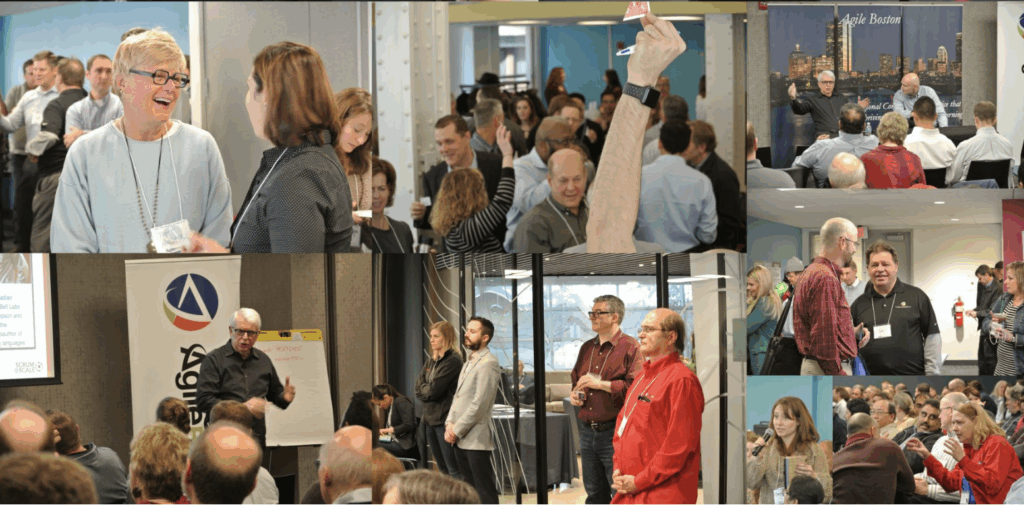
Scrum in the AI Singularity: The Next 30 Years Last week, at the Give Thanks for Scrum 2025 conference in Boston, the community gathered to reflect on a massive milestone: “Scrum Renewed.” While it is vital to honor the last 30 years of digital transformation mastery, my focus at the event was entirely on the next 30 years of Scrum in the AI Singularity. We are standing at the edge of an event horizon. The rules of the game are not just changing; they are being rewritten by superintelligence. If the last three decades were about managing work, the next three will be about managing Human-AI Symbiosis. Here is the core message I delivered to the community: We must pivot, or we risk irrelevance. The New Reality for Scrum in the AI Singularity We are accelerating toward the Singularity. This is the moment, predicted by futurist Ray Kurzweil to arrive around 2045, when artificial intelligence surpasses all human intelligence combined. This shift is creating a massive economic paradox I call the Abundance-Scarcity Delta. In this environment, the “price of a line of code” is rapidly trending to zero. If your team is still focused solely on “output”—on just writing code or closing tickets—you are performing work that a machine will soon do faster, cheaper, and better. The Pivot: From Process to Cognitive Orchestration What is the purpose of Scrum in the AI Singularity? It is no longer about managing the process of work. It is about Cognitive Orchestration. The Scrum Team must evolve into the engine that directs, constrains, and validates superintelligence. To navigate this shift, we must apply First Principles: Evolution of Roles for Scrum in the AI Singularity To survive the transition, our accountabilities must mature. The traditional titles remain, but their functions change drastically: The Product Owner: Guardian of Purpose The Product Owner evolves into the Guardian of Purpose. Their primary role is ethically prioritizing what a super-AI should think about, ensuring the output aligns with human values. The Scrum Master: Steward of the Interface The Scrum Master becomes the Steward of the Interface. They manage the friction between human ethics and machine speed, specifically working to prevent “hallucination loops” where the AI validates its own errors. The Developers: Master Experimenters The Developers become Master Experimenters. They are no longer just builders; they are the designers of probes that validate the AI’s rewritten science and code. Building the Bridge This vision is daunting. We cannot jump to an interstellar scale overnight. We need a bridge. Over the next 5 years, JVS Management predicts we will see the integration of AI Co-pilots directly into the team, the rise of Bio-Enhanced Retrospectives to manage indefinite-lifespan teams, and eventually, the management of Off-World Compute logistics. The Presentation: Visualizing the Shift To fully understand the data behind the Abundance-Scarcity Delta and the timeline for the Singularity, I invite you to review the full presentation deck from Give Thanks for Scrum 2025. These slides detail the mathematical trajectory of AI acceleration and the specific “First Principles” frameworks we must adopt immediately. Conclusion For 30 years, Scrum helped us build the world. For the next 30, Scrum must help us guide the future. We are not being replaced. Those who accept this mission are being promoted. We are the ones who must teach the AIs, and the world, how to build with purpose, courage, and respect. The journey continues. Thank you for being its guardians. Key Takeaways for Management

The 100x Imperative: Why Your Scrum Team Needs to Wake Up to the AI & Bitcoin Reality
The 100x Imperative: Why Your Scrum Team Needs to Wake Up to the AI & Bitcoin Reality In thermodynamics, a phase transition isn’t a gradual slide. When water hits 100°C, it doesn’t just get hotter—it fundamentally changes its state to steam. It expands. It becomes volatile. It becomes powerful. We are currently living through a violent phase transition in the global economy. For the last 20 years, Scrum has been about optimizing human scarcity. We used Sprints and Backlogs to manage the limited bandwidth of human cognition. But what happens when intelligence becomes infinite, near-free, and instant? In my upcoming book, First Principles in Scrum: Advanced Strategies and Reflections, we strip away the “best practices” of the past to look at the physics of the future. And the physics are telling us something terrifying and exhilarating: The era of “Human-in-the-Loop” for every transaction is over. The Rise of the Agentic Economy We are no longer just building tools for humans. We are building the AI Agent—autonomous software entities that don’t just “assist” us; they are the workforce. Agents are already writing 80% of boilerplate code. By next year, they will be negotiating contracts, procuring resources, and executing trades. An AI Agent doesn’t sleep, doesn’t take weekends off, and operates at the speed of silicon. This creates a 100x Multiplier. But it also exposes a fatal bottleneck that most Agile leaders are ignoring. The Ferrari and the Plow Imagine a Super-Intelligence capable of executing 10,000 business decisions per second, forced to wait 3 to 5 business days for a bank transfer to clear. It is like putting a speed limiter on a Formula 1 engine that caps it at 5 MPH. Legacy banking is permissioned, reversible, and slow ($Days$). AI requires settlement that is permissionless, final, and mathematical ($\mu s$). As we explore in the chapter “The Physics of Abundance,” AI Agents are rational actors. They will not choose legacy finance. They will insist on Bitcoin and the Lightning Network. Why? because it is the only network that functions at their speed without a human gatekeeper who can turn them off. Scrum@Scale: The Orchestration Protocol So, where does that leave the human Scrum Master or Product Owner? Are we obsolete? Absolutely not. But our role must evolve from “task management” to “swarm orchestration.” Raw kinetic energy (AI) without direction is just an explosion. We cannot manage 10,000 agents with a Gantt chart. This is where Scrum@Scale becomes the critical infrastructure of the 21st century. It is the leading AI/Human Interface designed to allow humans and machines to collaborate. Read the Future Before It Arrives The gap between the “Future-Built” companies (who are giving their agents economic autonomy) and the “Legacy Layer” (who are trying to force AI into bureaucratic silos) is widening. This is an extinction event. If your competitor’s OODA loop is 100x faster because of AI, and their settlement cost is near-zero because of Bitcoin, you are mathematically eliminated. In First Principles in Scrum: Advanced Strategies and Reflections, we don’t just talk about better Stand-ups. We map out the thermodynamics of this new economy. We look at how to build the rails for the machine economy using the empirical process control of Scrum. The phase transition is here. Are you ready to be the architect, or the steam? AI Bitcoin Scrum: Building Products for a World That Just Got Faster Five years ago, a roadmap review meant debating funding, scope, and timelines. Today, your competitors ship in days, agents write code, and settlement can happen in seconds. That’s why we use AI Bitcoin Scrum as a lens: it connects AI’s deflationary force, Bitcoin’s incentive design, and Scrum’s delivery tempo into one operating picture for leaders who have to decide fast and be right more often. Imagine a team standing at the whiteboard on Monday morning. The backlog is full of “good ideas.” By Wednesday, half those ideas are obsolete—AI prototypes proved cheaper paths, and customer telemetry killed two assumptions. By Friday, a pricing test with instant settlement opens a market you couldn’t reach last quarter. AI Bitcoin Scrum is how that team thinks clearly through the noise and keeps momentum without burning out. Why AI Bitcoin Scrum matters now AI collapses costs and compresses cycles. That means you can learn faster—but only if your cadence lets you. Bitcoin, through predictable issuance and an open settlement network, changes how value moves across your system: customers, partners, even devices. Scrum remains the human-scale rhythm that makes both effects usable: small increments, frequent inspection, and decisions tied to real signal instead of slideware. If your planning assumptions came from a scarcity world—slow iteration, expensive experiments, and friction in payments—your product strategy is already out of date. The chapter lays out a practical way to reframe those assumptions without betting the company on any single narrative. From noise to narrative Leaders don’t need another hype cycle; they need a narrative that links incentives to delivery. In the chapter, we map three truths: None of this is theory for theory’s sake. It’s the connective tissue for making calls on sequencing, budget, and risk—especially when every quarter feels like a new playbook. What changes on Monday A useful test of any framework is what you do first. With AI Bitcoin Scrum, the first move is narrative clarity: what game are we playing and how do we win? From there, teams translate that narrative into a backlog that favors small, testable bets over “big rocks” that hide uncertainty. Finance aligns with delivery tempo—settlement, pricing experiments, and treasury stance support the roadmap instead of constraining it by habit. You’ll see the difference in meetings. Debates shift from “how much can we build” to “how fast can we learn.” Plans stop assuming that money movement is slow or that intelligence is scarce. Teams get honest about where AI helps, where it doesn’t, and how to measure value without gaming the metrics. Leadership in a deflation-native world The hardest part isn’t the tools; it’s the posture. Leaders who<a href="https://sandbox.jvsmanagement.com/the-100x-imperative-ai-bitcoin-scrum/">Continue reading <span class="sr-only">"The 100x Imperative: Why Your Scrum Team Needs to Wake Up to the AI & Bitcoin Reality"</span></a>

The Next 30 Years of Scrum
The Next 30 Years of Scrum Artificial intelligence is changing how teams plan, learn, and deliver. Over the next 30 years, Scrum will evolve from a process for teams into an operating model for human and AI collaboration. That shift places purpose, evidence, and ethics at the heart of delivery. It is also the core vision behind the Scrum Expansion Pack: a practical guide for building products that matter while technology accelerates. Why Scrum must evolve now Most organizations feel the pressure of rapid automation. The real risk is not replacement; it is creating more output that does not matter. Without a resilient framework, hybrid teams fall into integration issues, ethical blind spots, and always-on fatigue. Scrum must guide cognitive orchestration so that value, and values, remain central. The vision in plain language The next 30 years of Scrum reframes agility as the way to direct intelligence at scale. People bring intent, context, and creativity. AI brings speed, analysis, and pattern discovery. Scrum provides cadence, roles, artifacts, and evidence to align both and to keep learning continuous. What changes in practice Roles that collaborate with AI Scrum Masters and Product Leaders use AI copilots to sense risk, improve flow, and refine backlogs. Teams learn when to accept suggestions and when to insist on human judgment. Accountability for outcomes and ethics stays with people. Backlogs that include ethics The backlog is more than a sequence of features. It is a set of choices about safety, privacy, fairness, and long-term impact. Prioritization balances these with time to market and revenue so that products serve real needs. Planning that handles uncertainty High-change environments reward probabilistic thinking. Plan in ranges, inspect true signals, and decide based on evidence. Replace certainty theater with transparent assumptions and short feedback loops. Scope that scales to new frontiers The same patterns that help a healthcare app today can guide complex systems tomorrow. The framework scales across long horizons and many forms of intelligence, from robotics to space programs. A practical roadmap you can start now Foundation and awarenessCreate core assets for teams, executives, and trainers. Run focused sessions on Scrum and AI. Share visual summaries that clarify choices and trade-offs. Engagement and early winsLaunch learning paths for AI-enhanced Scrum Masters and Product Owners. Pilot with a small number of initiatives to produce case studies and reusable playbooks. Bridge the next five years Why moving first matters Leaders who act early gain a lasting advantage. They focus talent on outcomes, not outputs. They build market narratives that buyers understand. Most importantly, they reduce the chance of failed AI programs by putting ethics, evidence, and human purpose at the center from day one. How to measure progress Tools that make the work real Start small and build momentum: Each tool stands alone. Together they form a system that keeps people in the loop while improving quality, speed, and trust. What this means for your organization If you are a founder, a chief product leader, or a transformation sponsor, the question is simple. Will your teams rely on a framework that assumes only human limits, or on one that helps people and AI deliver value together with integrity and joy? The next 30 years of Scrum invites you to choose the second path and to begin today. Ready to prepare your organization for the next 30 years of Scrum? Book a consultation with Jeff Sutherland to align strategy, training, and implementation for AI-ready agility. In the meantime, learn more in our related presentation, which expands on this roadmap and offers a concise starter kit for getting started. Discover more insights in the video.
Why Hybrid AI Teams Need a Technical Product Owner
Why Hybrid AI Teams Need a Technical Product Owner Technical Product Owner for Hybrid AI Teams is a role quickly becoming essential in today’s complex AI-assisted software development landscape. At JVS Management, we’ve experienced firsthand that managing teams consisting of both human and AI contributors, such as ChatGPT, Claude, Grok, and Gemini 2.5, demands clear structure. Without defined processes, performance rapidly deteriorates; with them, velocity significantly improves. In this blog, we delve into why a Technical Product Owner for Hybrid AI Teams, combining product leadership with engineering expertise, is critical. We also explore how principles from biology, physics, and Karl Friston’s neuroscience illuminate why Scrum’s simplicity is exceptionally effective in managing these innovative teams. From Chaos to Clarity: A Scrum Reset Initially, progress in our hybrid AI team was unpredictable. Bugs could spiral into infinite loops. Automated tests bred like rabbits. Security features halted our builds. That all changed when we reintroduced Scrum, tight sprints, five-minute standups, and a clear decision-maker. Velocity jumped nearly fivefold, and stress dropped significantly. Scrum in a nutshell? Work in small increments, inspect results daily, and adapt immediately. But for hybrid teams, there’s a twist. Complex Systems Need Smart Feedback Loops Why does Scrum work, especially with AI teammates? The answer lies in Complex Adaptive Systems (CAS). In biology, organisms survive by constantly reducing the gap between what they expect and what they sense. This is what neuroscientist Karl Friston calls the Free-Energy Principle. Scrum mimics this biological loop, short sprints surface surprises early, enabling adaptation before failure compounds. You can’t out-calculate a complex system. As Stephen Wolfram notes, some systems are computationally irreducible, you have to run them to see what happens. Scrum embraces this truth. It doesn’t try to predict the future. It helps you adapt to it. Enter the Technical Product Owner (TPO) In hybrid teams, the traditional role of “orchestrator” falls short. You need someone with both business insight and technical authority. A TPO fills that gap. What does a TPO actually do? This isn’t just about managing scope, it’s about safeguarding feedback loops that hybrid teams rely on. Quality Without Slowing Down Hybrid teams move fast, and brittle QA processes can’t keep up. We used a lean quality strategy built around: This approach enables continuous verification without drowning in thousands of unit tests. How to Get Started If your team is transitioning to hybrid intelligence, here’s a quick implementation roadmap: The result? No task, human or machine, gets stuck for more than 20 minutes.. Scaling with a CPO-HI Larger organizations may need a Chief Product Owner – Hybrid Intelligence (CPO-HI) to oversee multiple hybrid squads. This role owns the meta-backlog and enforces standards across teams, mirroring the structure of Scrum@Scale. The Bottom Line AI agents can generate code faster than ever, but physics, entropy, and real-world hardware still apply. Scrum provides the rhythm. The Technical Product Owner ensures the beat stays productive. Don’t settle for a generic “AI orchestrator.” Put someone in charge who can manage complexity, provide firm direction to AIs, maintain quality, and adapt fast. Want to see what this looks like in action? Let’s talk. Book a consultation with us today.
AI Scrum Assistant Improves Sprint Velocity and Predictability
AI Scrum Assistant Improves Sprint Velocity and Predictability In the competitive world of Agile software delivery, consistent sprint performance is key to maintaining team morale, meeting deadlines, and maximizing value. However, many Scrum teams struggle with inaccurate estimations, scope creep, and inconsistent burndown charts that hinder progress. That’s where the AI Scrum assistant, ChatGPT Scrum Sage: Zen Edition Version 2, steps in. Designed in collaboration with Dr. Jeff Sutherland, co-creator of Scrum, this AI-powered tool guides teams through sprint planning, daily standups, and retrospectives improving velocity and smoothing burndown trends. Real-World Impact: Insights from Sprint Data We examined burndown charts and velocity trends across 10 sprints from a Scrum team using traditional methods versus adopting ChatGPT Scrum Sage v2. The Scrum team in the data is from CI Agile. The team consists of 1 Product Owner (PO) and 3 Developers, with varying levels of experience. The Scrum Master has 3+ years of experience, while the PO and Developers have less than 6 months of experience in Scrum, excluding the Scrum Master. Ethan Soo, who is the business stakeholder and Agile Coach, provided valuable insights into the team’s progress. Key findings: These improvements are not just statistical, the team reported higher confidence, clearer priorities, and less stress during sprint execution. How the AI Scrum Assistant Drives Results ChatGPT Scrum Sage v2 delivers multiple features tailored to address common Scrum pain points: Together, these capabilities create an environment where data guides decision-making without replacing the team’s human judgment and creativity. The Team’s Experience with AI-Driven Scrum Ethan Soo, reflecting on the ongoing usage of Scrum Sage v2, notes that the absence of the Scrum Master has had a significant negative impact on the team’s progress, even with the help of Scrum Sage. “Without an experienced Scrum Master,” he explained, “the developers may not know how to leverage Sage effectively and may not fully comprehend the advice Sage is providing.” This observation comes as a surprise, as the AI-driven tool has proven to enhance Scrum practices. The insights emphasize the importance of having a competent Scrum Master to guide the team in fully utilizing the AI tool to its fullest potential. Why It Worked: The Power of AI in Scrum ChatGPT Scrum Sage didn’t replace the human elements of Scrum—collaboration, creativity, and ownership—but amplified them. By automating repetitive tasks like backlog analysis and providing real-time feedback, it freed Ethan and his team to focus on problem-solving and innovation. Key benefits included: This aligns with industry trends: teams using AI-driven tools report 20–30% improvements in engagement and delivery efficiency. Ethan’s team mirrors this, with burndown charts reflecting a shift from reactive firefighting to proactive planning. For additional insights into how AI is transforming Scrum, check out our podcast episode. In this episode we discuss how AI tools like Scrum Sage are driving efficiency in Agile teams. Lessons Learned: Tips for AI-Driven Scrum Success Based on Ethan’s experience, here are actionable tips for Scrum teams looking to integrate AI tools like ChatGPT Scrum Sage: The Future of Scrum is AI-Enhanced Ethan Soo’s journey with ChatGPT Scrum Sage V2 proves that AI can transform Scrum without sacrificing its human core. The burndown charts from Sprints 43–47 tell a story of smoother progress, higher velocity, and a happier team. As Ethan puts it, “AI didn’t replace our Scrum values—it made them shine brighter.” For teams in Asia and beyond, this is a call to embrace AI-driven tools to unlock their full potential. Ready to revolutionize your Scrum team? Try ChatGPT Scrum Sage v2 and watch your burndown charts transform. Want to learn more about how to achieve this? Book a consultation with Dr. Jeff Sutherland to take your team’s performance to new heights. Source Attribution:Burndown chart and velocity data provided by Ethan Soo’s Scrum team, analyzed in partnership with Jeff Sutherland.Ethan Soo is a Registered Scrum and Scrum@Scale Fellow.
Automating Sprint Planning: Optimize Your Scrum Team’s Velocity
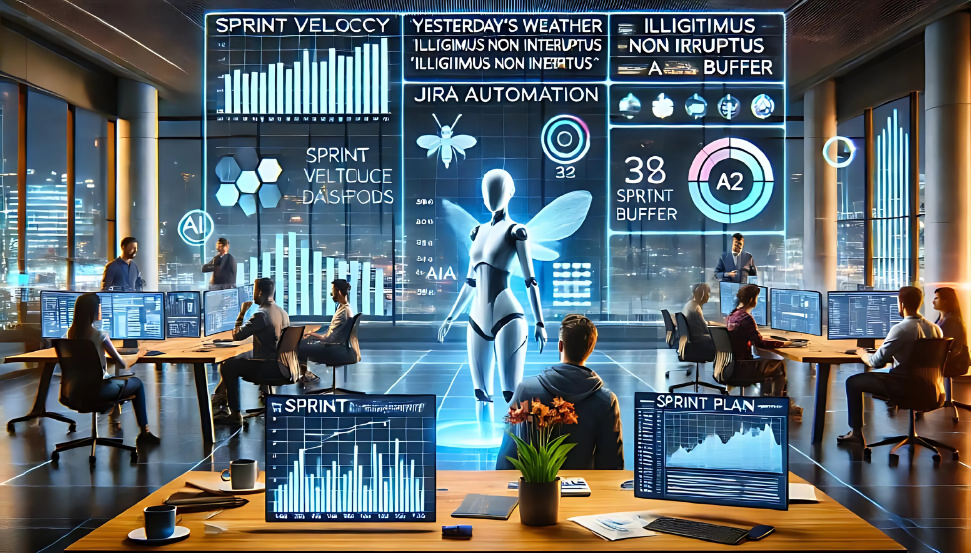
Automating Sprint Planning: Optimize Your Scrum Team’s Velocity Scrum teams often struggle to determine how much work to pull into their sprints. The result? Sprints are frequently late, teams become overwhelmed, and productivity suffers. Leveraging AI for sprint planning solves these issues by automating a crucial Scrum principle known as Yesterday’s Weather. Want to learn more? Listen to our podcast. What Is Yesterday’s Weather? “Yesterday’s Weather” is a Scrum technique that predicts the work a team can accomplish based on their average velocity in recent sprints. This proven practice helps teams avoid over-committing and under-delivering, enhancing predictability and satisfaction. Automating Yesterday’s Weather with AI AI tools integrated with Jira automation streamline sprint planning, ensuring accuracy without manual effort: Real-World Example If your team completed 52, 58, and 64 points in the last three sprints, your average velocity is 58 points. If a key team member is out for one day, contributing an average of 5 points daily, your adjusted velocity becomes 48 points. Accounting for an average of 5 unplanned points, your sprint plan is now: Why Adopt AI for Sprint Planning? Implementing AI automation significantly enhances sprint outcomes by: Embrace the Future of Sprint Planning Scrum Masters, Product Owners, and Agile Teams can dramatically improve their efficiency by adopting AI for sprint planning. Trust data-driven sprint forecasting and free your team to focus on delivering real value. Ready to revolutionize your sprint planning with AI? Start today!

AI and the Product Backlog: ChatGPT Training in Action
AI and the Product Backlog: ChatGPT Training in Action This post is part of our ongoing series exploring AI’s role in Agile. In our previous article, we examined how AI assists with backlog refinement—what worked and where it fell short. Today, we’re diving into the practical side: how to train ChatGPT to break down high-level tasks, distribute workload, and prioritize your sprint backlog more effectively. But here’s the critical piece: not all AI models are equal when it comes to backlog management. ChatGPT-4o allows you to create custom GPTs, giving you control over training data and backlog refinement. Other versions—like o1 and o3—lack this feature, which significantly limits how well they can adapt to your specific Agile processes. This means that with ChatGPT-4o, you can create a tailored AI assistant that securely retains and refines your backlog management approach over time. In contrast, o1 and o3 lack the ability to store and process your critical data in a dedicated environment, creating limitations that require constant manual intervention. This makes a world of difference when working with proprietary backlog data, team-specific sprint structures, and custom workflows. Bridging the Gap Between Theory and Practice We’ve talked a lot about the why of AI-driven backlog refinement. The main takeaway? While ChatGPT isn’t fully autonomous, it’s already proving invaluable as an assistant—quickly drafting user stories, recalling repetitive tasks, and suggesting preliminary priorities. But how do we turn these promises into actual sprint outcomes? Below, we’ll walk you through the steps we use to train ChatGPT. You’ll see how to feed it the right mix of inputs—from team capacity to sprint history—so that each sprint it proposes is realistic, well-prioritized, and aligned to your broader product goals. If ChatGPT is going to break down your backlog accurately, it needs context. The more structured your inputs, the more refined the output. Think of it like teaching a junior team member. 1. Introducing Scrum Fundamentals By absorbing the key principles from Jeff Sutherland’s Scrum: The Art of Doing Twice the Work in Half the Time, ChatGPT gains vital context for effective backlog refinements. Core Scrum values—like iterative development, transparency, and continuous improvement—guide how tasks are broken down, story points are assigned, and priorities are set. This ensures each recommendation aligns with real-world Scrum practices, helping your team deliver maximum value each sprint. 2. Lay the Foundations: Team & Project Context Before ChatGPT can break down your backlog accurately, it needs to understand the who and the what of your project. This ensures ChatGPT won’t overload any single role, keeping your sprint plan realistic. Giving ChatGPT an overview of your product’s purpose, target audience, and technology stack helps it suggest tasks in the right context (for example, pointing out UI considerations if you’re using React or factoring in SEO if it’s a marketing site). By laying out team details and project context first, ChatGPT can align tasks to your actual capacity and overarching goals. Think of it like onboarding a new team member: the more background they have, the smarter their contributions. 3. Provide Relevant Sprint History As much as ChatGPT learns on the fly, it isn’t automatically synced to your Jira backlog. Manually give it a glimpse of your last few sprints: By referencing past sprints, ChatGPT can better gauge your team’s true velocity and spot patterns in repetitive tasks or underestimation. The goal is to teach the AI how your team typically works, so it can propose more accurate story points and prioritization sequences. 4. Distinguish Repetitive vs. New Tasks Now that ChatGPT knows your team, your project, and your sprint history, it’s ready to handle the what of your backlog. Once ChatGPT sees which tasks are repeated and which are brand-new, it can auto-fill recurring items into your sprint plan while dedicating extra effort to refining the new features. 5. Prioritizing Backlog With team & project context, past sprint insights, and the actual tasks (repetitive or new) in place, ChatGPT is primed to: Prompt example: “Hi ChatGPT! Here is our latest Product Backlog, along with a new feature we want to add this sprint: Let’s aim for a well-balanced sprint that delivers maximum value while keeping scope realistic. Please provide a clear breakdown of tasks, owners, and points, along with short rationales for each decision.” 6. Validate & Refine No AI is an outright replacement for human judgment. Once you have ChatGPT’s proposed breakdown, gather your Scrum team for a quick review: ChatGPT will respond with a proposed sprint plan—creating user stories, assigning owners, and even explaining why it prioritized one feature over another. It’s not perfect yet, but it drastically reduces manual effort. We’ve found that this human-AI collaboration leads to faster planning cycles. ChatGPT’s initial draft is often 70–80% there, leaving you to finesse the final 20%. 7. Common Pitfalls—and How We’re Tackling Them Despite its progress, ChatGPT isn’t infallible. Here are the biggest hiccups we’ve encountered: Why This Matters for Agile Teams Efficiency Gains: By automating parts of backlog refinement, we’ve reclaimed hours of meeting time.Consistency: ChatGPT treats repetitive tasks the same way every time, avoiding human error or forgetfulness.Enhanced Focus: With admin overhead out of the way, teams can focus on strategic decisions, innovation, and solving user problems. Still, AI doesn’t replace the need for a skilled Scrum team. It’s an assistant—helping you catch oversights, stay organized, and move faster. The ultimate decisions, trade-offs, and creative problem-solving remain human territory. Ready to Supercharge Your Next Sprint? We’re not at full automation yet, but each iteration brings us closer to the dream of AI-driven backlog refinement. Stay tuned for our next post, where we’ll dig even deeper into the nitty-gritty of AI-assisted Scrum. Got Questions? Because the future of Agile isn’t about replacing teams with AI—it’s about empowering them to do their best work.

AI and the Product Backlog: Progress and Challenges
AI and the Product Backlog: Progress, Challenges, and the Road Ahead Managing AI and the Product Backlog efficiently is critical for Agile teams. The backlog is the heartbeat of a Scrum team—guiding priorities, ensuring focus, and helping teams deliver value in each sprint. But as organizations scale and complexity grows, backlog refinement becomes a time-consuming task. That’s where AI comes in. The promise? An AI-powered backlog refinement process that streamlines prioritization, tracks dependencies, and optimizes sprint planning. The reality? We’re getting closer, but full automation isn’t here—yet. Our team has been pushing the boundaries of AI-assisted backlog refinement, using ChatGPT and structured workflows. While we’ve made significant progress, gaps remain, and we’re learning what it takes to truly integrate AI into Scrum. This blog is part of a series exploring AI’s role in Agile. Today, we’re breaking down what worked, what didn’t, and what comes next in AI-driven backlog refinement. How AI Helps in Backlog Refinement (So Far) We’ve experimented with ChatGPT-4o to assist in Product Backlog management. Our goal? To automate as much of the refinement process as possible, while keeping human oversight where needed. AI Can Already Help With: ✔ Identifying repetitive tasks – AI can recognize recurring backlog items from past sprints.✔ Organizing backlog inputs – AI can structure information from multiple sources, including Dropbox, Jira, and meeting notes.✔ Suggesting prioritization – AI can analyze urgency and dependencies to make preliminary task recommendations.✔ Generating backlog descriptions – AI can draft definitions and descriptions based on past similar tasks. These capabilities reduce manual effort, helping the team focus on higher-value work. But despite this progress, AI isn’t fully autonomous yet. What AI Still Can’t Do (Yet) Even with structured inputs, we encountered key challenges: ❌ Lack of Agile Context – AI doesn’t inherently understand backlog prioritization principles without extensive training. It struggles with story point allocation, sprint balancing, and team capacity constraints. ❌ No Real-Time Sprint History Analysis – AI can’t yet pull from previous sprint data dynamically. We had to manually provide sprint histories to give it a learning baseline. ❌ Inconsistent Task Classification – AI occasionally misclassifies tasks, requiring manual review to correct categorizations between UX/UI, development, or content-related items. ❌ No Deep Scrum Knowledge (Yet) – We had to manually insert key concepts from Scrum: The Art of Doing Twice the Work in Half the Time because AI models aren’t fully trained in deep Agile principles. The takeaway? AI is a powerful assistant, but not yet a replacement for skilled Scrum teams. Lessons Learned and the Path Forward Despite these limitations, we’ve seen huge efficiency gains when AI is used as an enhancer, not a replacement for backlog refinement. Here’s what we’ve learned: 1. AI Needs Structured Inputs 📌 AI performs best when it receives clearly formatted data. We provide: 2. Human Oversight is Essential 📌 AI can suggest priorities, but Scrum teams must validate them. We use incremental reviews to catch errors before sprints are finalized. 3. Future AI Models Will Close the Gaps 📌 We plan to integrate newer AI releases with deeper Agile understanding. Future iterations should: We’ll be testing new AI models soon—stay tuned for updates. AI and Agile: A Work in Progress The dream of fully AI-powered backlog refinement isn’t here yet—but we’re making real progress. AI is already helping reduce manual backlog work, but Scrum teams still need to guide prioritization and oversee refinement sessions. The future? A hybrid approach where AI handles routine tasks, and teams focus on strategic decision-making. This is just the beginning of our AI + Scrum exploration. In upcoming posts, we’ll dive deeper into:🔹 AI-assisted sprint planning and capacity forecasting🔹 How AI can improve user story writing and refinement🔹 The role of machine learning in Agile team efficiency Want to Optimize Your Agile Workflow? 📖 Read Jeff Sutherland’s books to deepen your understanding of high-performance Scrum. Shop Now 📅 Book a consultation to see how AI and Agile can work together in your team. Schedule Here 🚀 The future of Agile isn’t AI replacing teams—it’s AI empowering them. Let’s build it together.
Explore more
Go further with practical guidance and insights.